
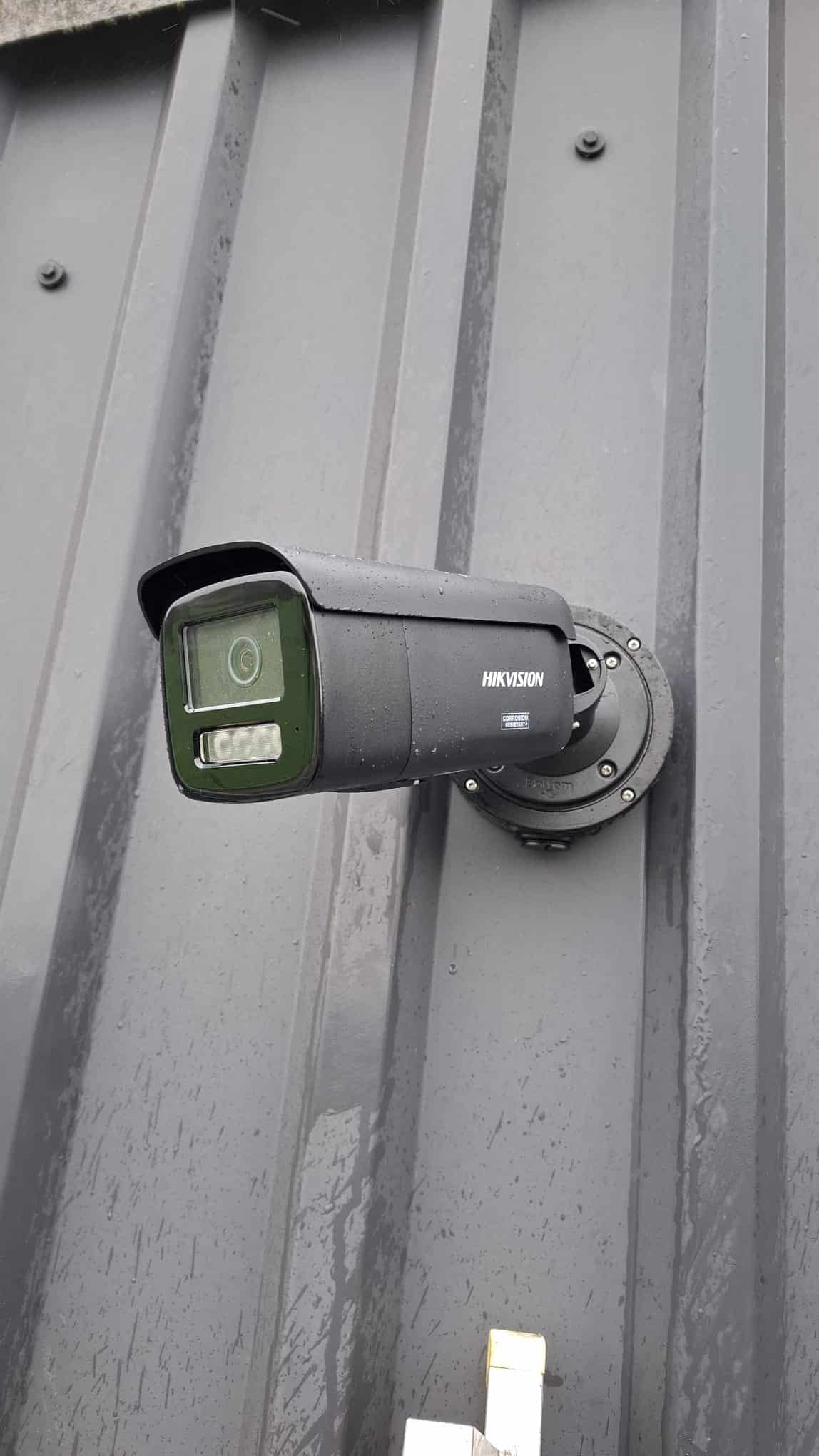
Real agricultural installs
Professional camera positioning and tidy real-world farm installation work.
Agricultural CCTV guide for Wales and England
A full long-form guide to farm CCTV, livestock cameras, yard security, remote farm monitoring, wireless links, 4G cameras and grant-focused farm CCTV planning for Welsh and English farms.
Farm yards
 PTZ views
 Rural sites
Most pages about farm security cameras are either too generic, too thin, or too focused on selling a box of cameras rather than explaining how a working farm should actually be covered. This page is designed to be different. It is written as a genuine pillar page for farms, estates, smallholdings, rural businesses and agricultural customers who want to understand what a good CCTV setup really looks like, what problems it solves, where cameras should go first, what type of camera suits each area, how remote viewing should work, how to cover buildings that are far apart, and how all of this ties into grant-focused searches in Wales and England.
A farm is not a normal domestic site. The distances are longer. The risks are different. The weather is harsher. Internet is often weaker. The value stored on site can be very high, whether that value is livestock, machinery, tools, fuel, feed, vehicles or simply the continuity of the business itself. A camera system that might be fine on a suburban house can be completely wrong for a farmyard, lambing shed, calving shed, machinery compound or remote field entrance.
Farm CCTV is not just ordinary CCTV bolted onto a farm building. On a farm, cameras are being asked to do several jobs at once. They may need to protect against theft, help monitor animal welfare, watch entrances and exits, provide visibility over machinery or fuel, alert someone to movement after dark, and give enough recorded detail to be genuinely useful after an incident.
A strong farm CCTV system therefore starts with planning, not products. The first stage is identifying how the site functions: which entrances are actually used, where people and vehicles naturally move, where the valuable assets are, which buildings matter operationally, what the weak points are after dark, where internet exists, where power is available, and what type of view would genuinely help the farmer.
This is why good farm CCTV is more about outcomes than specifications. High resolution matters, but only when the camera is positioned correctly for the job. Night vision matters, but only if the placement, angle and lighting strategy support it. Wireless flexibility matters, but only if the system remains stable and the data path is dependable.
The biggest difference between a cheap generic setup and a properly designed agricultural system is that the proper system makes sense when something actually happens. If someone enters the yard at night, can you see when they arrived, what route they took, what they approached, and what they left with? If a ewe is lambing, can you see enough to decide whether she needs attention?
One of the biggest mistakes people make is trying to cover everything equally from day one. That usually spreads the budget too thinly and leaves the most important areas only partially protected. On most farms there is a better approach: identify the highest-risk and highest-value zones first, protect them properly, and then expand later if needed.
The first priority on many farms is the main entrance or the most meaningful route in. This is because entry points create the start of the timeline. If someone enters the farm, you want to know when they entered, how they arrived, what direction they took, and whether they were known or unknown.
The second priority is usually concentrated value. Machinery yards, workshops, stores, quads, utility vehicles, fuel tanks, bowsers, tool storage and feed or fertiliser areas often deserve direct, intentional coverage because they are expensive to lose and attractive to thieves.
The third priority is operational visibility. Some farms care as much about livestock oversight as about theft. On those sites, lambing sheds, calving sheds, maternity areas and key livestock buildings need to be included early in the design.
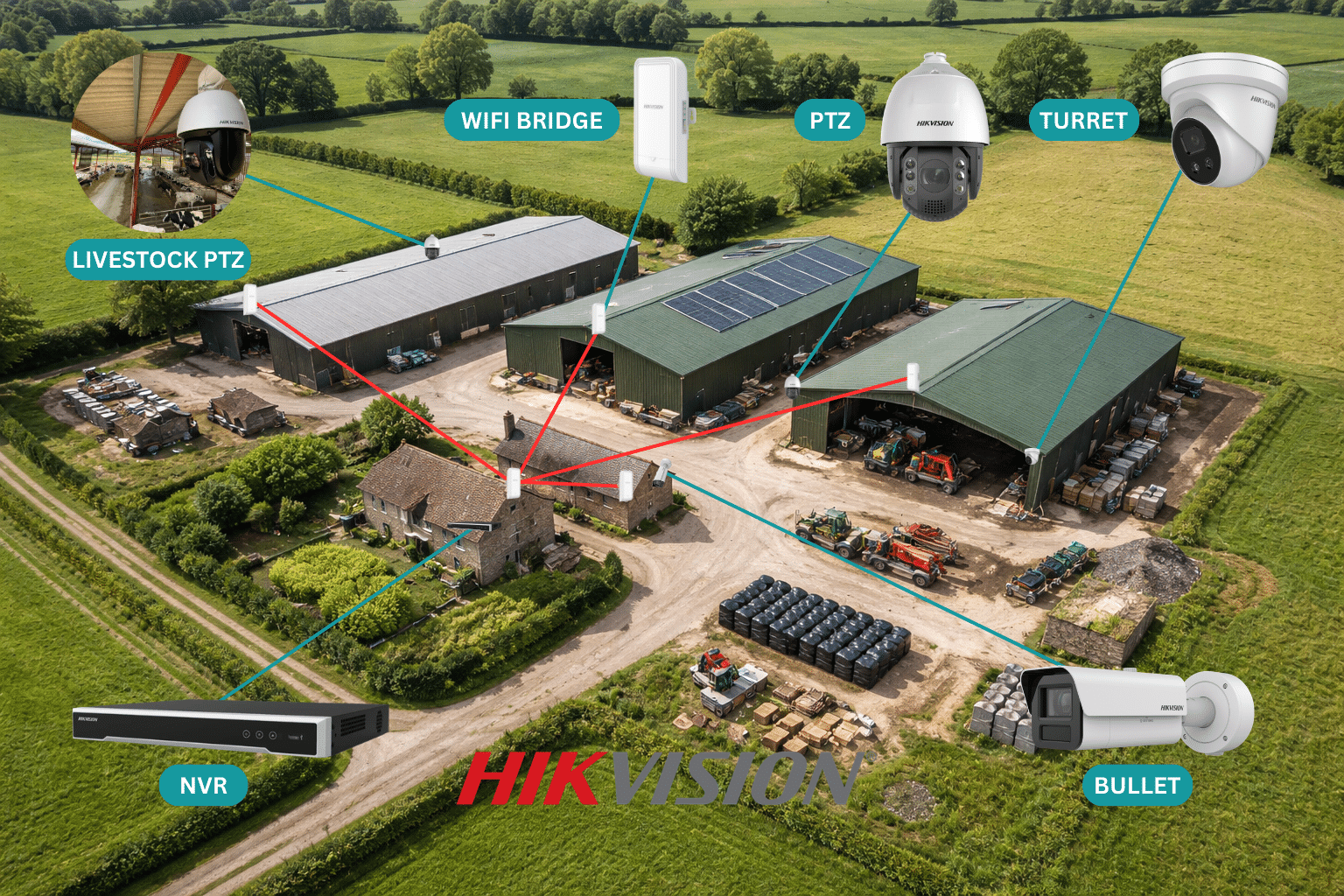
Remote routes and isolated buildings come next. If a building is far from the main yard but contains something valuable or important, it should have its own strategy. Sometimes that means a point-to-point wireless link. Sometimes it means a 4G deployment.

Good agricultural CCTV systems usually mix camera types rather than relying on one model everywhere. The jobs differ. The camera that is perfect for a livestock shed is not necessarily the right one for a fuel tank, a yard entrance or a large open farmyard.
Fixed cameras are the backbone of most farm systems. They stay looking at the area they were designed to protect and give consistent evidence when something happens. On farms, they are especially useful at entrances, workshop doors, machinery areas, fuel tanks, feed stores, rear elevations, barn doors and routes between buildings.
PTZ stands for pan, tilt and zoom. These cameras are popular on farms because they can cover large areas and allow the viewer to zoom further into the scene. They are particularly useful on broad open yards, compounds and larger agricultural settings.
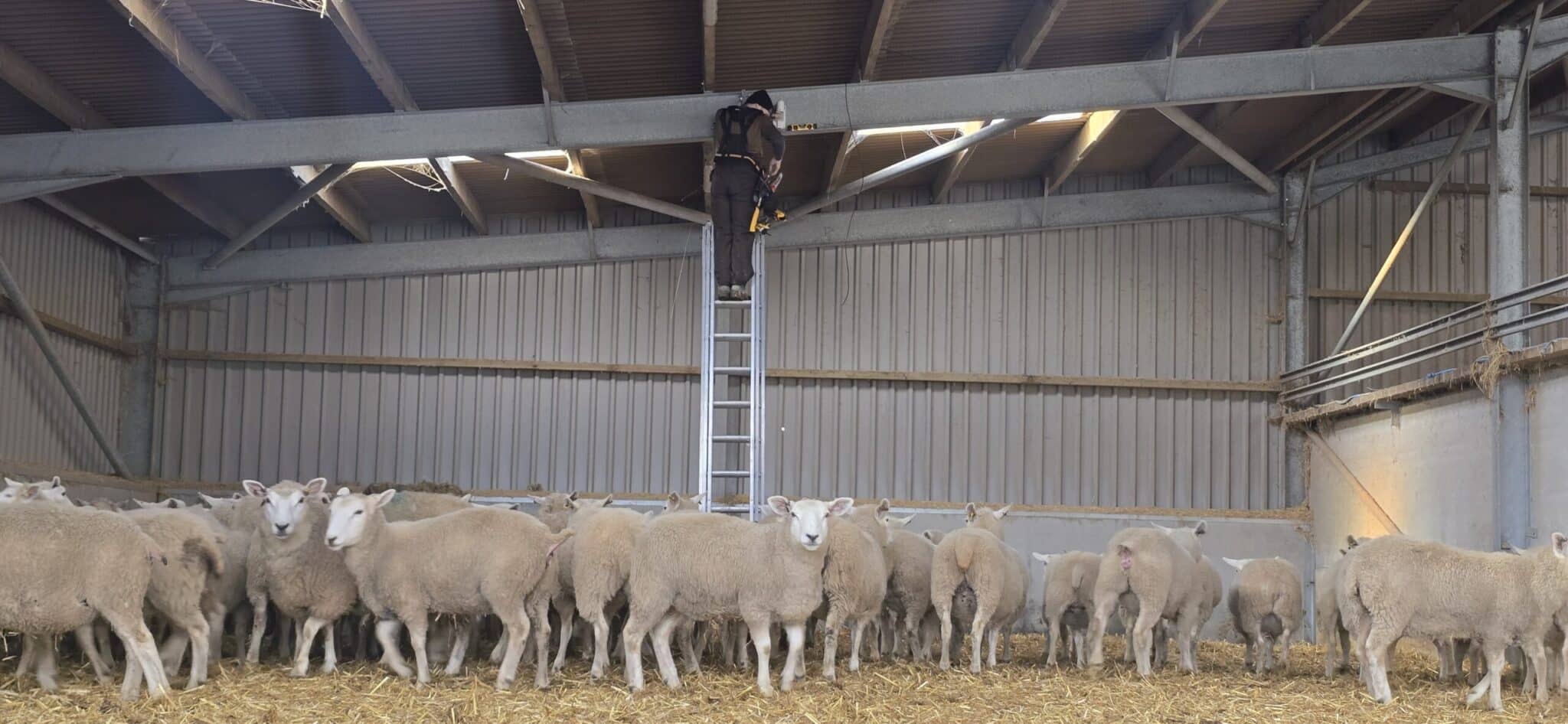
Livestock-focused cameras are often less about deterrence and more about practical observation. These are the cameras that help you look into a lambing shed, calving area, maternity pen, stable or internal livestock space without repeated disturbance.
These matter because farms often contain areas where both power and internet are difficult. In the right location, 4G cameras, solar-supported cameras and wireless bridges can make remote deployment realistic without excessive trenching or cable runs.


Farm CCTV grants and funding pages
This guide is designed to support the whole farm CCTV cluster. If you are specifically looking at funding routes, scheme language, grant-related system planning or regional grant intent, use the dedicated pages below as well.
One of the biggest practical uses for farm CCTV is livestock monitoring. For many farms, cameras are not just there to deter theft. They are there because it is impossible and unnecessary to physically walk to the shed every few minutes when cameras can provide the visibility needed.
Lambing and calving are the obvious examples, but the principle is broader than that. A camera can help monitor an animal’s behaviour, progression, agitation, separation, posture or distress without repeatedly opening the shed and adding more disturbance.
The important thing with these cameras is usefulness. Too many systems are mounted too high, too far back, or too wide to actually help. In a livestock building you usually need a stable and legible angle. You want to know quickly whether the ewe is progressing, whether the cow is restless, whether assistance looks likely, or whether you can leave them undisturbed for now.
Low-light performance matters as well. Many sheds do not have ideal lighting, and night checks are common. The right camera choice and placement can make the difference between a genuinely readable image and a muddy scene that forces you to go and look in person anyway.
If your site has a dedicated lambing page, this guide should link to it naturally, for example lambing cameras.


Machinery and fuel are among the most obvious security priorities on many farms. They combine high value with relative mobility, and in the case of fuel, they can often be targeted quickly.
Machinery theft is rarely just about the machine itself. It is also about disruption. A stolen tractor, quad, telehandler attachment or high-value tool can immediately affect work, staff planning, feed movement, transport, maintenance and routine timing.
Fuel is similar. If a tank sits at the edge of the yard, behind a building, beside a workshop or somewhere that looks sort of covered, that is usually where the design needs sharpening up. The camera should have a reason to be there.
Workshops deserve careful treatment because they combine tools, access, vehicles, stored components and often a point of movement through the site. Sometimes the correct answer is a camera directly on the main door, plus another angle that gives wider context.
Quads and ATVs are a classic example of where CCTV should never be expected to do all the work alone. A good camera is extremely valuable, but the best result comes when it is combined with practical physical resistance, strong chains, fixed anchors, locked buildings and sensible lighting.
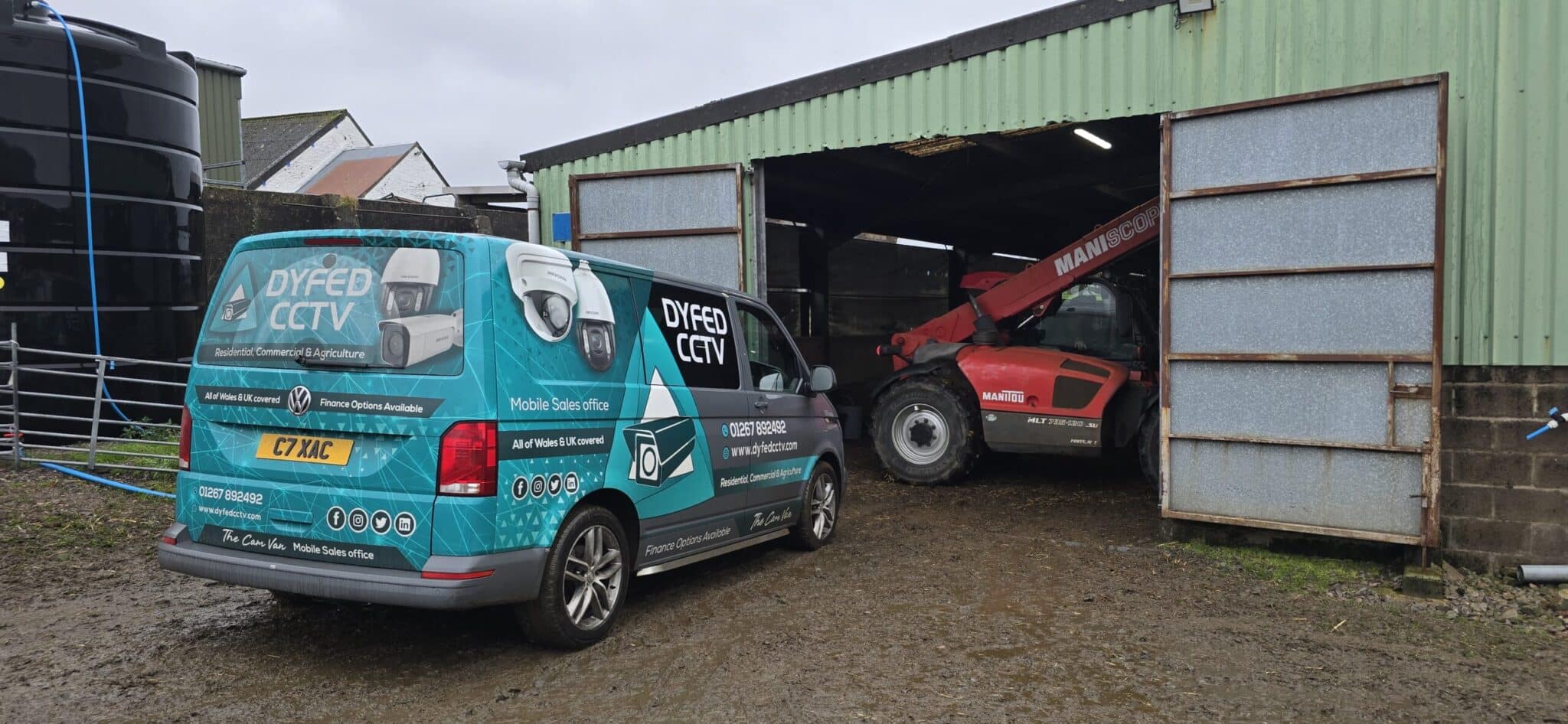
One reason farm CCTV is a specialist topic is that coverage often needs to stretch beyond the obvious central yard. Farms have detached barns, livestock buildings, workshops across the road, distant feed stores, stables, lower yards, hill sheds, isolated gates and access tracks that are nowhere near the main broadband line.
There are generally three broad ways remote agricultural coverage gets solved. The first is cabling. The second is wireless bridging. The third is 4G or standalone deployment, which is especially useful where the location matters but conventional internet access does not exist in the right place.
The key is choosing the right method for the right location. A remote gate may not justify the same infrastructure as a key detached livestock shed. A lower yard containing machinery might justify a wireless bridge. A hilltop location with intermittent usage might justify a solar and 4G solution.
Good remote-building CCTV is therefore about selective problem-solving. It is about accepting the realities of rural infrastructure and using the right blend of wired, bridged, solar or 4G technology to get visibility where it genuinely counts.


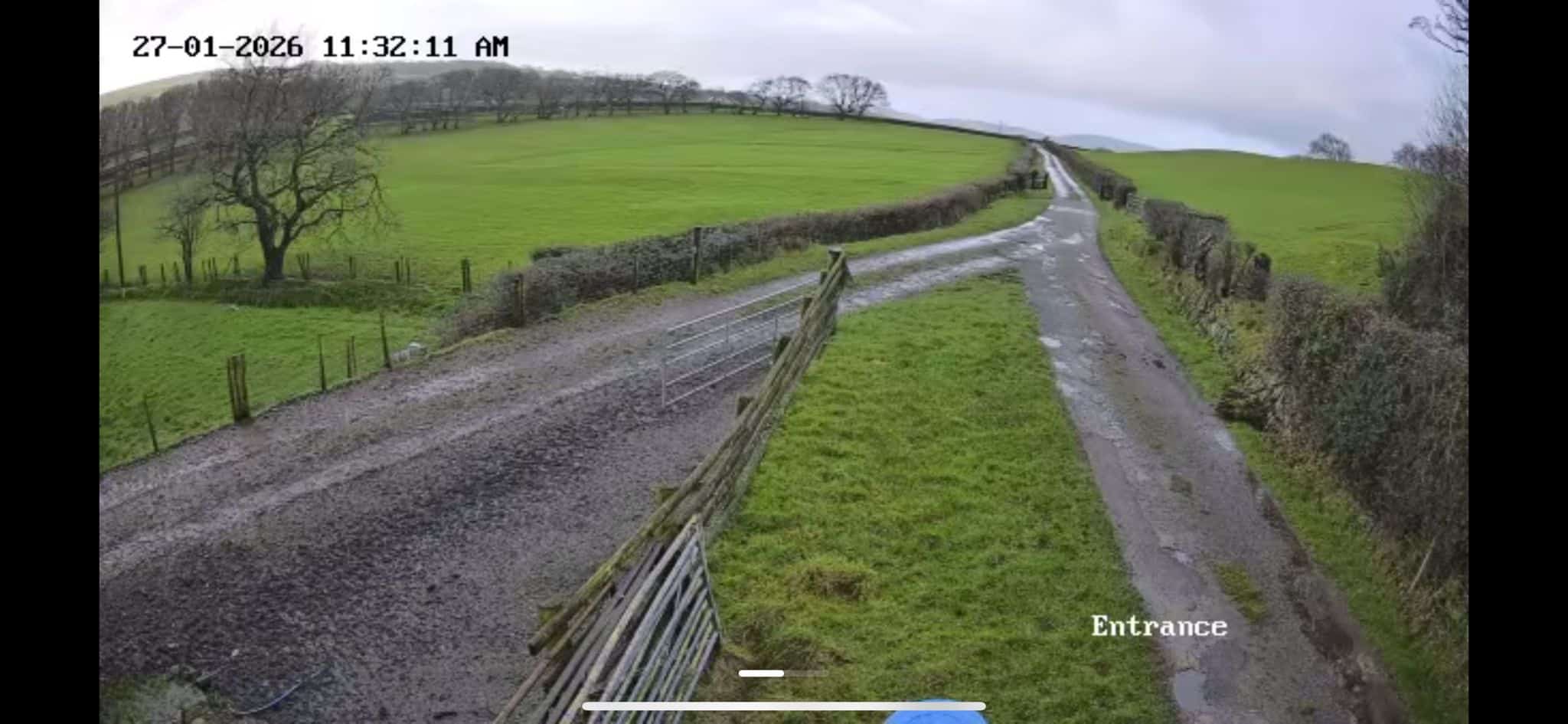
The harsh truth about many camera systems is that they look acceptable in daylight and then disappoint badly at night. That matters even more on farms because many of the highest-risk events happen after dark.
Night performance is not simply a matter of whether the spec sheet says night vision. It depends on the camera, the lens, the angle, the distance to the subject, the degree of contrast in the scene, the level of stray light, any reflective surfaces and the weather.
Agricultural sites expose equipment to wind, rain, dust, dirt, temperature swings and a general level of punishment that lighter-use installations do not always face. The right product choice matters, but the right layout matters even more.
Lighting is part of this discussion too. A security floodlight or a well-planned external light can dramatically improve a camera’s usefulness, but only when it is positioned properly and does not create glare or washout.
This page works best as the centre of your farm CCTV content cluster. It should support and be supported by the pages below.
The best farm CCTV system is the one designed around the specific farm layout, the highest-risk areas, the operational needs of the site and the available power and connectivity.
On most farms the first cameras should go on the main entrance or approach route, the main yard, fuel storage, machinery or workshop areas, and any key livestock building that needs regular monitoring.
Yes. Many farm deployments can use 4G cameras, wireless bridges, local recording or solar-supported off-grid approaches where conventional internet is limited or unavailable.
Yes. Properly positioned livestock cameras can reduce unnecessary disturbance and improve visibility during lambing, calving and general animal monitoring.
Yes. Wales and England usually represent different search intent and should normally be separate pages for cleaner SEO and clearer user journeys.
Farm CCTV, Starlink and rural WiFi
Modern farm CCTV systems are no longer used only from a recorder in the farmhouse or office. Farmers now expect remote viewing, phone notifications, live access to lambing sheds, calving sheds, workshops, yards, fuel tanks, outbuildings and remote buildings from wherever they are.
The CCTV system can still record locally, but the day-to-day experience is much better when the farm has dependable broadband and proper WiFi coverage. Slow rural internet, weak router signal, thick stone walls, long distances between buildings and dead spots in sheds can all make remote CCTV viewing feel worse than it should.
This is why many farms now ask us to look at the full rural technology picture: the CCTV system, the broadband connection and the WiFi coverage across the property.


These services are separate from the farm CCTV system, but they often work together. Better broadband and better WiFi can support faster remote viewing, smoother mobile app use, more reliable notifications and stronger connectivity for modern farm operations.
Need a proper farm CCTV design?
Whether you need lambing and calving cameras, machinery-yard coverage, a PTZ for a main farmyard, direct coverage on fuel tanks, a 4G camera for a remote building, or a full multi-building agricultural CCTV design, Dyfed CCTV can help plan it properly.