Real farms. Thoughtful protection.The Wales field guide
Wales-focused farm security
SSAIB certificated
Farm-first CCTV planning
Rural crime awareness
Agricultural & Farming Security Across Wales
Agricultural Security, Farm Crime Prevention and Rural Crime Guidance for Wales
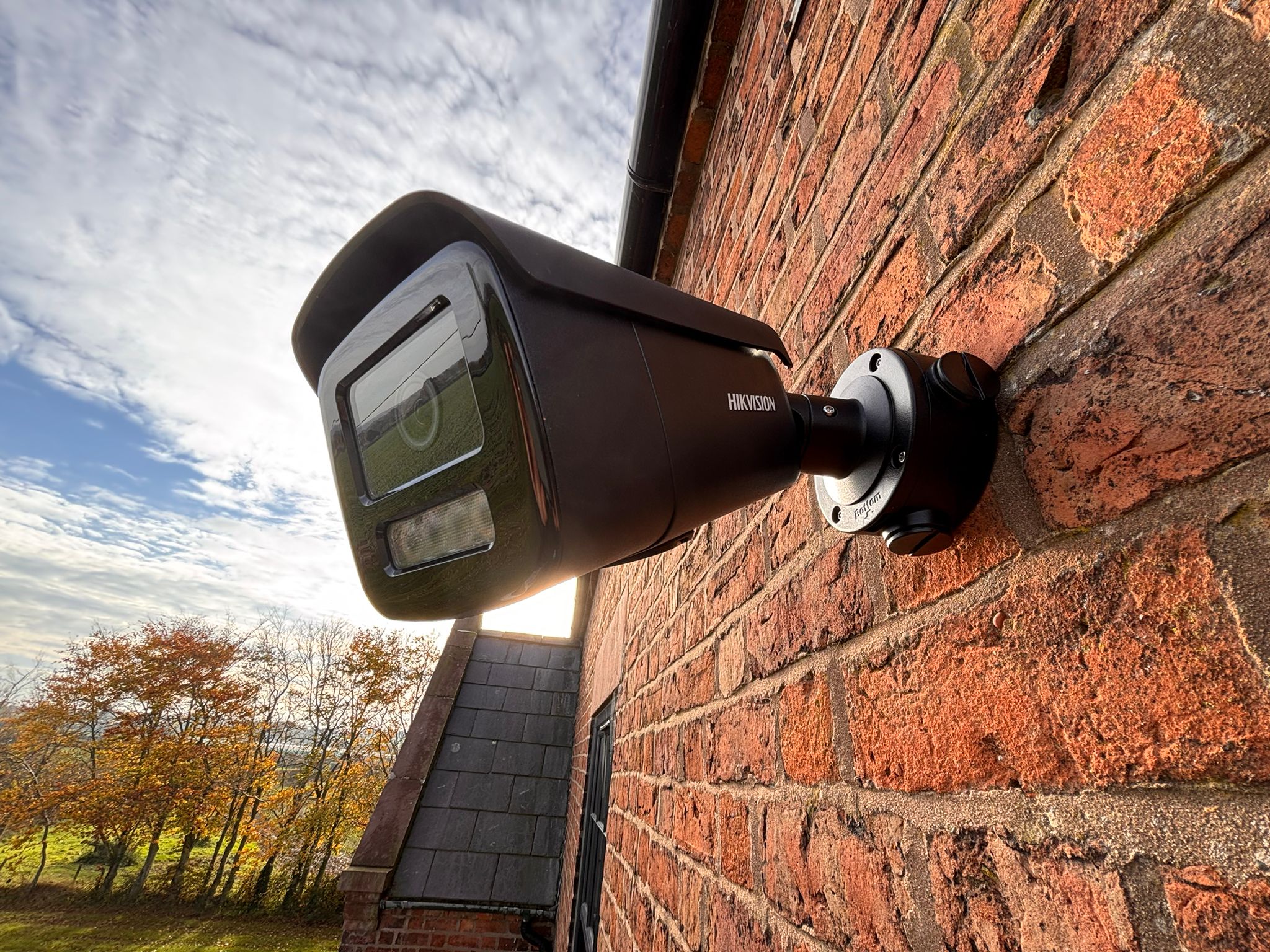
↗An installed camera overlooking the Welsh countryside.
Rural crime is not just a nuisance. It can mean stolen quad bikes, ATVs, tractors, trailers, tools, diesel, GPS equipment, machinery and livestock, damage to buildings and gates, repeat trespass, and the kind of disruption that affects the working rhythm of the whole farm. This page is designed as a practical, Wales-first guide to farm security, agricultural CCTV, rural crime prevention and layered site protection, with straightforward advice on what criminals usually target, how farms get assessed, where CCTV actually helps, and how to make a yard, machinery shed, workshop, fuel store or livestock area much harder to exploit.
Whether you are protecting a family farm in Carmarthenshire, a larger agricultural site in Powys, an exposed coastal unit in Pembrokeshire, a remote livestock setup in Ceredigion, or a mixed-use rural site in Swansea, Neath Port Talbot, Monmouthshire, Brecon, the Vale of Glamorgan or North Wales, the same principle applies: proper agricultural security starts with understanding access, workflow, target assets, blind spots, night-time vulnerability and the real routes thieves would use.
The working farm, considered
A better plan starts here.
Walk the routes. Prioritise the assets. Build useful evidence.
CarmarthenshirePembrokeshireCeredigionPowysSwanseaNeath Port TalbotMonmouthshireBrecon BeaconsCardiff & ValeNorth Wales
01 / The Welsh farming landscape
Why agricultural security matters so much in Wales
↗A working Welsh farmyard, photographed during a Dyfed CCTV installation.
Wales was the only UK nation or region highlighted in NFU Mutual’s 2025 rural crime reporting as seeing a rise in cost, with the estimated cost of rural crime in Wales increasing to £2.8 million, while the UK-wide total was estimated at £44.1 million. That matters because it shows clearly that farms in Wales are not insulated by geography, low population density or remote settings. In practice, remoteness often creates the opposite problem: fewer witnesses, wider sites, more outbuildings, longer boundaries, darker approach routes and more opportunities for offenders to learn the layout before returning.
On working farms across Wales, security is rarely about one building. It is about the relationship between the main entrance, side gates, machinery sheds, livestock buildings, fuel points, workshops, track access, yard flow and remote stores. That is why agricultural CCTV and farm security planning need to be treated differently from standard domestic CCTV. A farm is a live operational site. Vehicles move, gates are used, stock has to be checked, remote viewing matters, and the system needs to support both security and day-to-day management.
02 / The evidence
Rural crime statistics: the numbers behind the problem
NFU Mutual Rural Crime Report 2026
£41.5m
Estimated UK rural crime cost in 2025.
The current national picture.
NFU Mutual estimates the cost of rural crime fell by 6% in 2025 compared with 2024. The figures below retain the detailed 2024 reference from the original guide, including the Wales breakdown.
Security pages often stay vague. That is a mistake. The reason farms invest in layered protection is because there is a real, measurable pattern behind rural theft and agricultural crime. The latest widely cited reporting shows why issues like quad bike theft, tractor theft, trailer theft, livestock theft and GPS theft need to be taken seriously.
£44.1m
Estimated total cost of rural crime in the UK during 2024
£2.8m
Estimated cost of rural crime in Wales in 2024
+18%
Increase in rural crime cost in Wales
£2.7m
Estimated quad bike and ATV theft cost across the UK
£1.5m
Estimated tractor theft cost across the UK
£1.3m
Estimated trailer theft cost across the UK
£1.2m
Estimated GPS theft cost across the UK
£3.4m
Estimated livestock theft cost across the UK
The point is not to frighten people into buying cameras. The point is accuracy. A farm that stores expensive equipment, fuel, trailers, tools, livestock-handling kit or vulnerable stock across multiple buildings and entrances has a different risk profile from a normal property. Agricultural security has to reflect that reality.
Crime area
Current picture
What it means for farms in Wales
Wales overall
Cost rose to about £2.8m, up 18%
Wales was singled out for an increase, so agricultural sites here need active planning rather than assumptions.
Quad bikes / ATVs
Still one of the biggest rural theft categories
Portable, valuable and often parked in predictable places if site discipline is weak.
Tractors / machinery
Large-value theft remains a live issue
Weak entrances and open yard flow make it easier to move larger assets.
Trailers
Regular rural target
Often stored at site edges or in secondary yards where visibility is poor.
GPS / tech
Lower than the prior spike but still relevant
High-value precision kit remains attractive if left exposed on machines.
Livestock theft
Significant category with serious operational impact
Remote land, poor access control and weak monitoring create opportunity.
2024 reference: NFU Mutual Rural Crime Report 2025 (PDF). Estimates and claims figures follow the scope of that report. The 2026 national headline above covers 2025; it does not replace the historical Wales figures.
03 / Know your landscape
Farm security across Wales: local conditions, same underlying risks
Farm security needs vary across Wales. A livestock farm in Carmarthenshire may face different practical challenges from a remote holding in Powys, an exposed site in Pembrokeshire or a mixed rural property in Ceredigion. The details change from one farm to another, but the recurring concerns are similar: long approach roads, multiple outbuildings, machinery sheds, edge-of-site assets, weak secondary access points and the need for proper night-time evidence.
West Wales farms
Carmarthenshire, Pembrokeshire and Ceredigion often combine livestock work, mixed yards, older buildings and exposed rural access. Security has to deal with scattered assets, remote buildings and the reality that offenders may know local road networks well.
Mid Wales farms
Powys, Brecon and surrounding areas often involve large sites, distance between buildings, hillside or valley layouts, and longer wireless links between key points. In these environments, camera placement and route coverage matter more than simply adding more cameras at random.
South and East Wales rural sites
Monmouthshire, the Vale, rural Swansea hinterland and other edge-of-urban agricultural sites can face a mix of opportunist theft, repeat drive-bys and easy van access. Here, gates, road-facing approaches and plate-friendly angles become especially important.
That is why a proper farm security survey matters. Agricultural security is never just about the camera spec. It is about the relationship between the site layout, choke points, practical usage, workflow and criminal opportunity. A good design should support daily use while quietly making the farm a much less attractive target.
04 / What needs protecting
The most common agricultural security risks on Welsh farms
Rural crime is broader than one stolen machine. On real farms it is usually a mix of theft, reconnaissance, weak access control, repeated probing and opportunistic targeting. Criminals do not need every weakness. They need one weakness that matters.
↗Quad and ATV theft is a recurring theme in the original guide.
Quad bikes and ATVs
Quads are one of the most obvious farm targets because they are valuable, portable and often parked where they are easy to reach. A farm that leaves quads close to the edge of the site, visible through an open shed or only lightly secured is making the job easier than it needs to be.
Remove keys every time and separate key storage from the vehicle
Do not leave quads nearest the simplest route out
Use building security, anchors, tracking and proper evidential CCTV
↗Reference image from the original rural crime guide.
Tractors and machinery
Bigger kit is still targeted, especially where offenders understand the site and know where large vehicles can enter, turn and leave. Many farms focus on the machine itself but ignore the access route. That is backwards. If the route in and out is easy, the risk stays high.
Store major assets deeper into the yard where possible
Think about gates, turning space and trailer access for offenders
Cover cabs, doors, approach routes and exits, not just the shed front
Outlying sheds, edge-of-yard buildings and quieter stores are often weaker than the main yard. A farm might have decent coverage near the farmhouse but very little around the place where a trailer, fuel bowser or tool store is actually most exposed.
Secure hitch points and routes leading out of the site
Do not let remote buildings become blind spots
Use approach coverage, not just a single overview camera
Diesel, bowsers and storage points are obvious targets because they are useful, resellable and often kept away from the main occupied areas. Good fuel security means physical locking, sensible positioning, lighting where appropriate and CCTV that shows the route into the area, not just the tank itself.
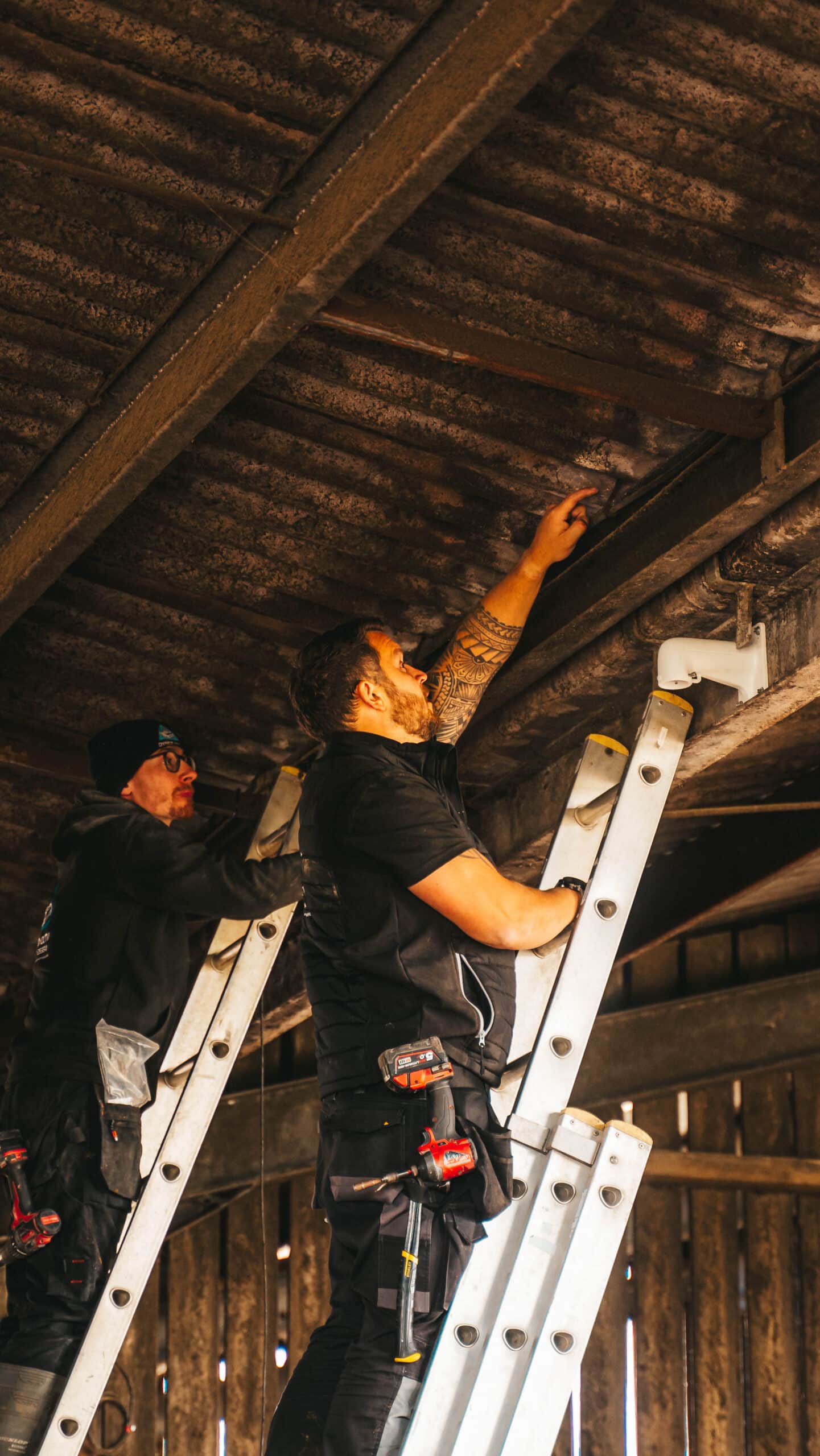
↗Engineers working inside an agricultural building.
Workshop and tool theft
Workshops can hold thousands of pounds worth of tools in one place. External doors, roller shutters, side entries and internal storage all matter. A weak workshop is one of the fastest ways for a thief to turn a small break-in into a large loss.
Livestock theft, livestock worrying, gate abuse and repeat vehicle access on agricultural land all sit inside the wider farm-security picture. Not every farm needs field cameras everywhere, but many need better thinking around key gates, routes and handling points.
05 / See the weak point
How criminals usually target farms and rural sites
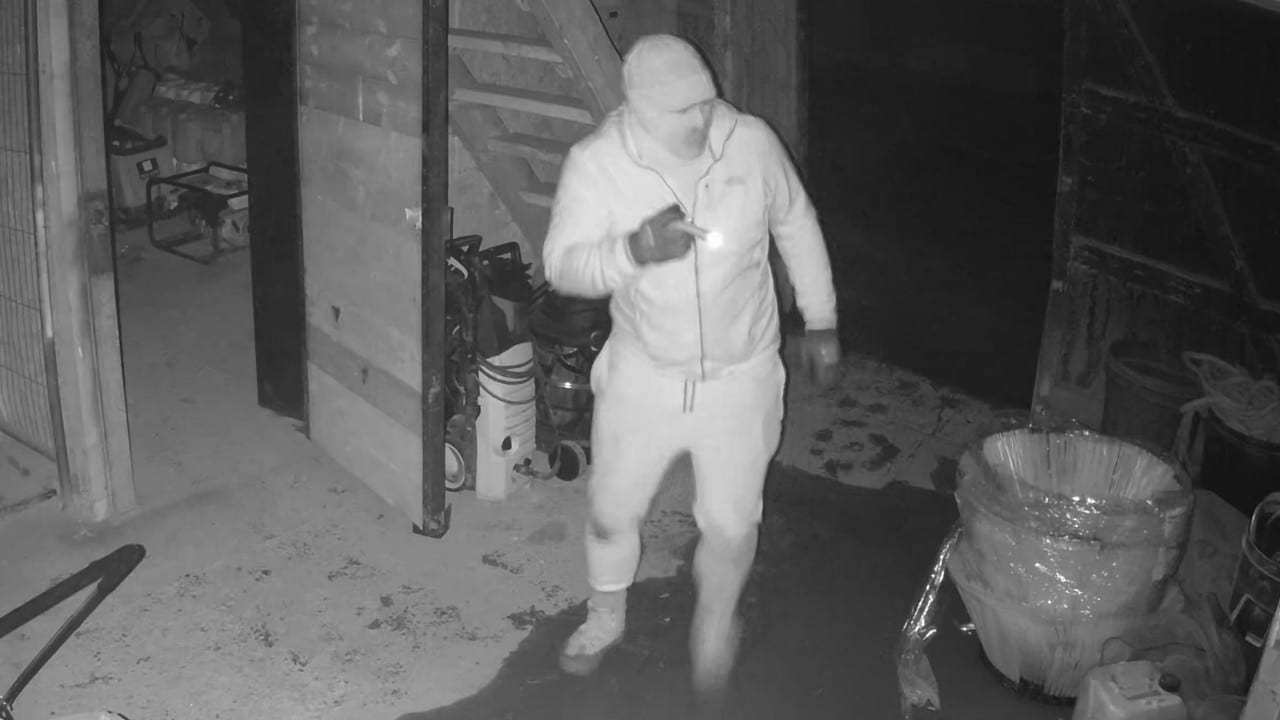
One of the biggest misconceptions in farm security is that thieves simply arrive by chance. In reality, many agricultural crimes are preceded by observation. That can be as simple as repeated drive-bys, checking which gates are used, watching which sheds are lit, learning where quads are parked, noticing which outbuildings are isolated, or identifying when yards are quiet because staff are elsewhere.
Typical targeting behaviour on farms
Testing gates, chains, entrance points and side access routes to see what is weak
Watching routines, including market days, school runs, staff finish times and feeding patterns
Learning where high-value equipment is left overnight
Identifying which buildings are lit, alarmed or overlooked and which are not
Checking whether vehicles can get in, turn around and leave quickly with stolen assets
Returning after an earlier visit once the easiest route and easiest target are clear
Exploiting farms that have cameras for overview only but not for usable identification
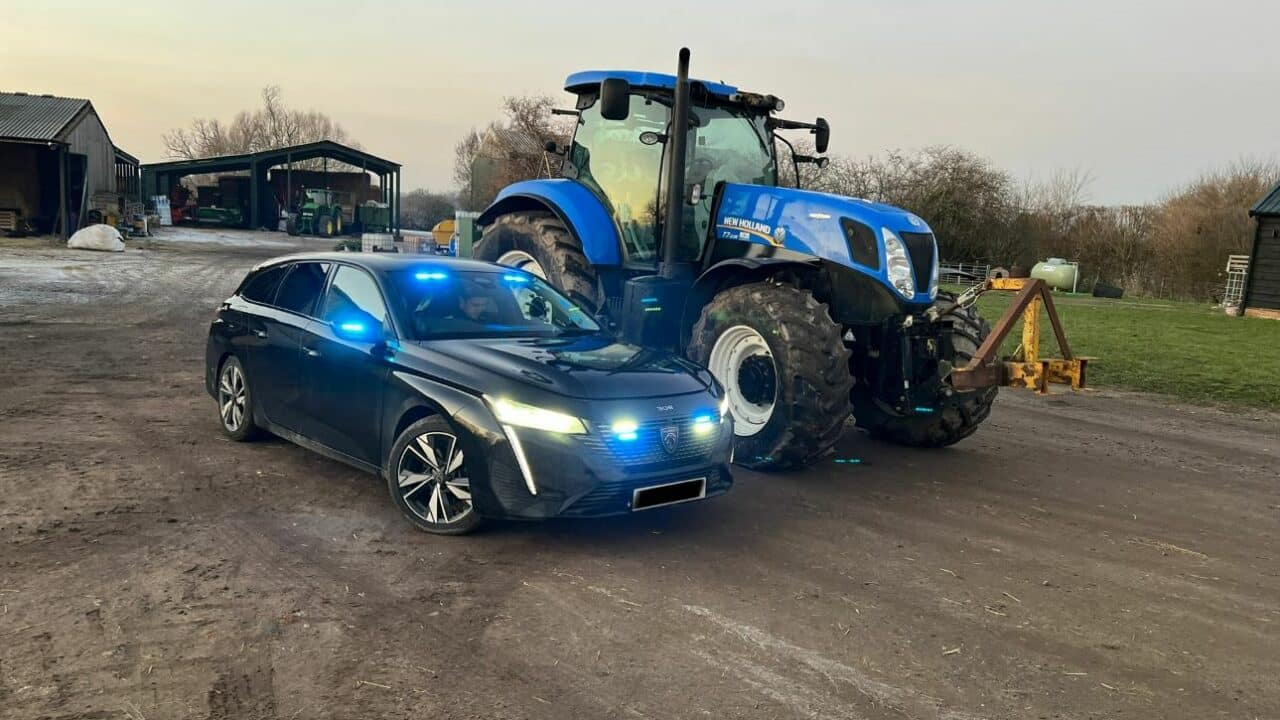
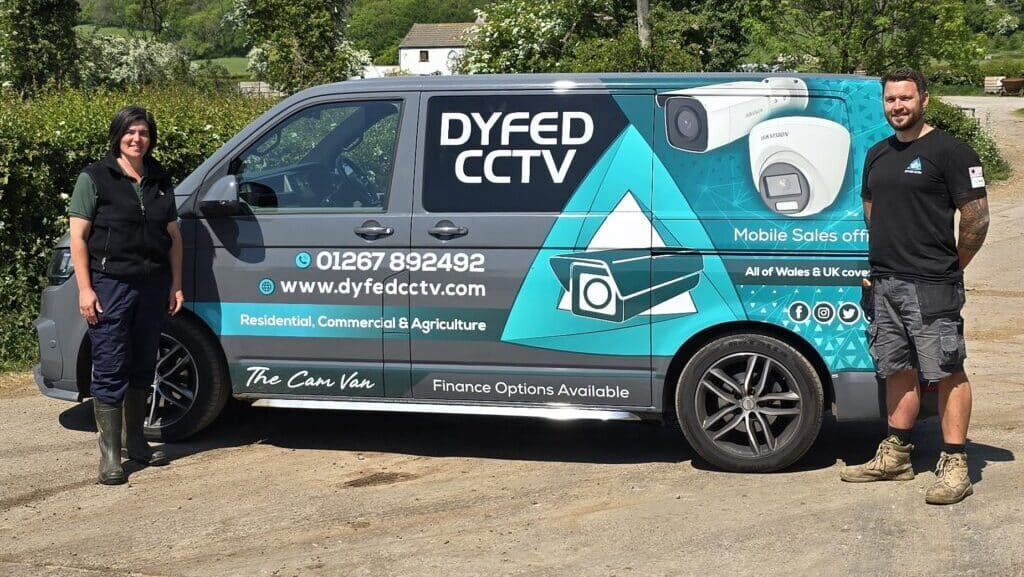
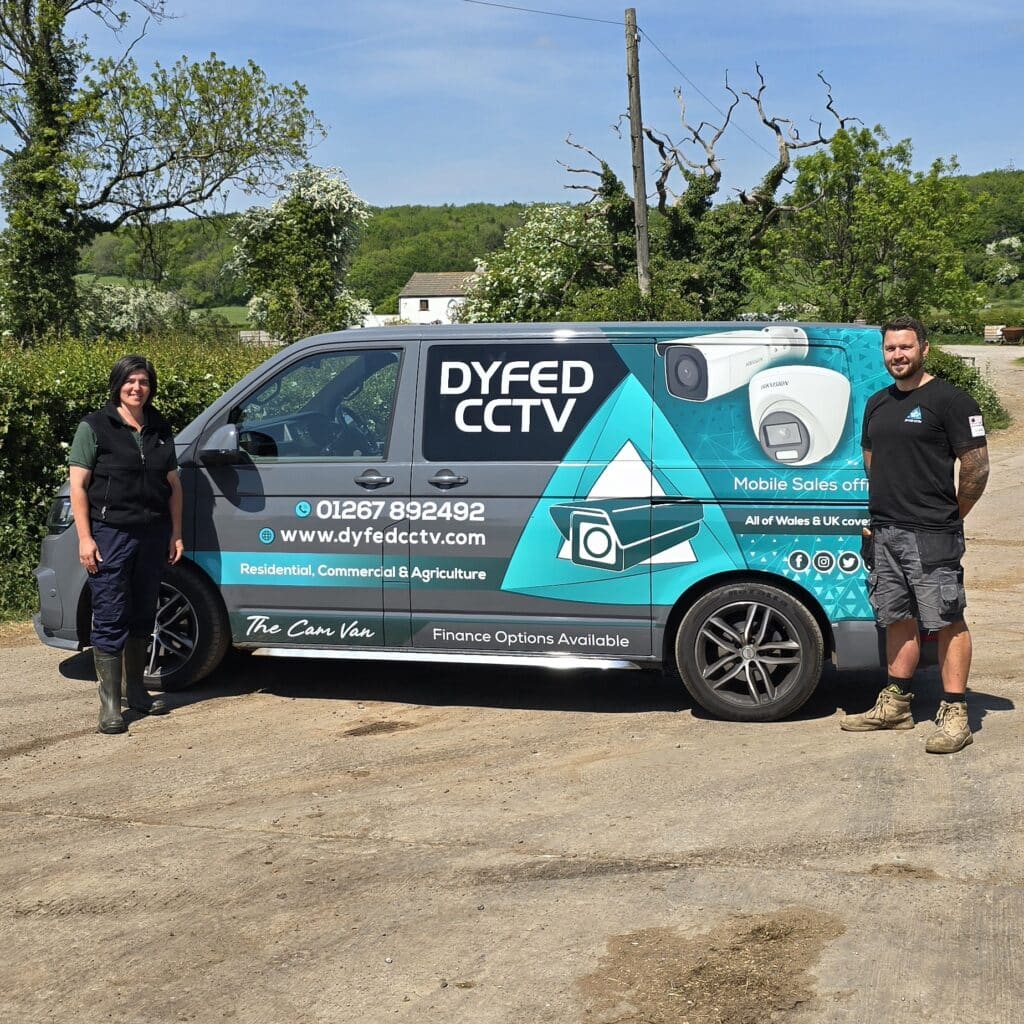
↗A Dyfed CCTV installation team attending a rural commercial site.
The weak-point pattern
A lot of farms do not have zero security. They have partial security. One decent camera, one strong door, one lit area, one alarmed section, but then one side gate that is half-forgotten, one workshop door that is too easy, one trailer left at the edge, or one remote shed that has no useful evidence coverage at all. That partial-security pattern is exactly what offenders look for.
Good agricultural security is not about assuming the worst. It is about removing obvious opportunities. That is why farm CCTV needs to focus on where people and vehicles must actually pass, not just where a wide picture looks impressive.
06 / Build protection in layers
The core principles of proper agricultural security
Whether the farm is small, large, tenanted, owner-occupied, upland, dairy, mixed or arable, the same core principles usually apply.
Access control
Know how the site is entered, which gates matter, and which entrances should be active, hardened or reduced.
Asset priority
Identify what is most attractive to thieves first: quads, fuel, trailers, tools, GPS kit, machinery or vulnerable livestock areas.
Evidence quality
Overview coverage is useful, but usable identification of faces, plates, doors, routes and actions is what changes outcomes.
Layered deterrence
Gates, locks, layout, lighting, cameras, signage and better routines work best together rather than in isolation.
Why layout matters more than people think
Two farms can buy the same cameras and get totally different results because the layout thinking is different. A site that channels traffic through one visible entrance, stores its highest-value equipment deeper inside the yard, protects the workshop and fuel point properly, and uses cameras on the routes that matter will feel much harder to exploit than a site with the same budget spent in the wrong places.
Why remote viewing matters on real farms
Farm CCTV is not just about playback after a theft. It is also about day-to-day confidence. Owners and staff want to be able to check yards, sheds, lambing areas, gate activity and outbuildings properly, without walking every route every time. A well-designed farm CCTV system helps with security and routine farm management.
07 / Take a farm walk
Which parts of a farm normally need the most protection?
Every farm is different, but most agricultural sites have the same priority areas. If these areas are left weak, the whole site becomes easier to exploit.
Six priorities. One connected plan. Explore the yard, then use the checklist below to turn the guidance into your own next steps.
These set the tone for the whole site. They are the first opportunity to create deterrence, route visibility and vehicle evidence. If the main gate is poorly protected, the rest of the farm starts from a weaker position.
Large buildings often create a false sense of security. A big shed with easy side access and no route coverage is still vulnerable, especially if expensive machinery, trailers or accessories are close to the door.
↗Engineers working inside an agricultural building.
Workshops and tool rooms
Concentrated value, predictable storage and limited visibility make workshops a common weak point. External security and internal organisation both matter here.
↗Clear security signage at an agricultural installation.
Fuel tanks, bowsers and stores
Fuel points are attractive because they are useful and often isolated. Think about access control, line of sight, locking and how easily someone could arrive and leave.
↗An engineer installing a PTZ camera in a livestock shed.
Livestock sheds and handling areas
These are important both for security and for day-to-day monitoring. Proper coverage can help with lambing, calving, general welfare checks and unusual vehicle or person movement around vulnerable buildings.
↗Dyfed CCTV engineers attending a rural commercial site.
Remote outbuildings and side yards
Many farms are let down by the areas that are used less often. A remote side yard or secondary store does not need to be the largest part of the site to be the easiest part to exploit.
Illustrative farm layout. Choose a point to explore its priority.
08 / Everyday habits, stronger protection
Farm security do's and don'ts
Good agricultural security is mostly about consistency. Small habits and layout decisions often decide whether a site feels like a hard target or an easy one.
Do
Use one main controlled entrance where possible and reduce unnecessary active access points
Remove keys from vehicles and do not store them in obvious workshop or office locations
Store quads, tools and high-value portable items deeper inside secure buildings where possible
Protect machinery sheds, fuel stores, workshops and side yards as priority locations
Use CCTV to cover routes in, routes out, gate lines, choke points and target assets
Review night performance properly instead of judging the system by daytime images only
Keep a good asset record with makes, models, serial numbers and photos
Report suspicious behaviour, tampering and attempted thefts rather than ignoring the pattern
Think about how the site will change in winter, lambing, silage season and busy periods
Don't
Do not rely on one high overview camera trying to cover a full yard from too far away
Do not leave high-value kit nearest the easiest route out of the site
Do not assume remote means safe or quiet means secure
Do not leave side gates, workshop doors or remote sheds outside the main security plan
Do not use CCTV as decoration without proper recording, positioning and remote access
Do not treat darkness as protection or assume offenders will not come back
Do not ignore small incidents such as missing fuel, cut chains, unknown vehicles or repeated drive-bys
Do not build the whole system around convenience if it leaves obvious blind spots
Do not forget that a farm layout changes over time and the security should evolve with it
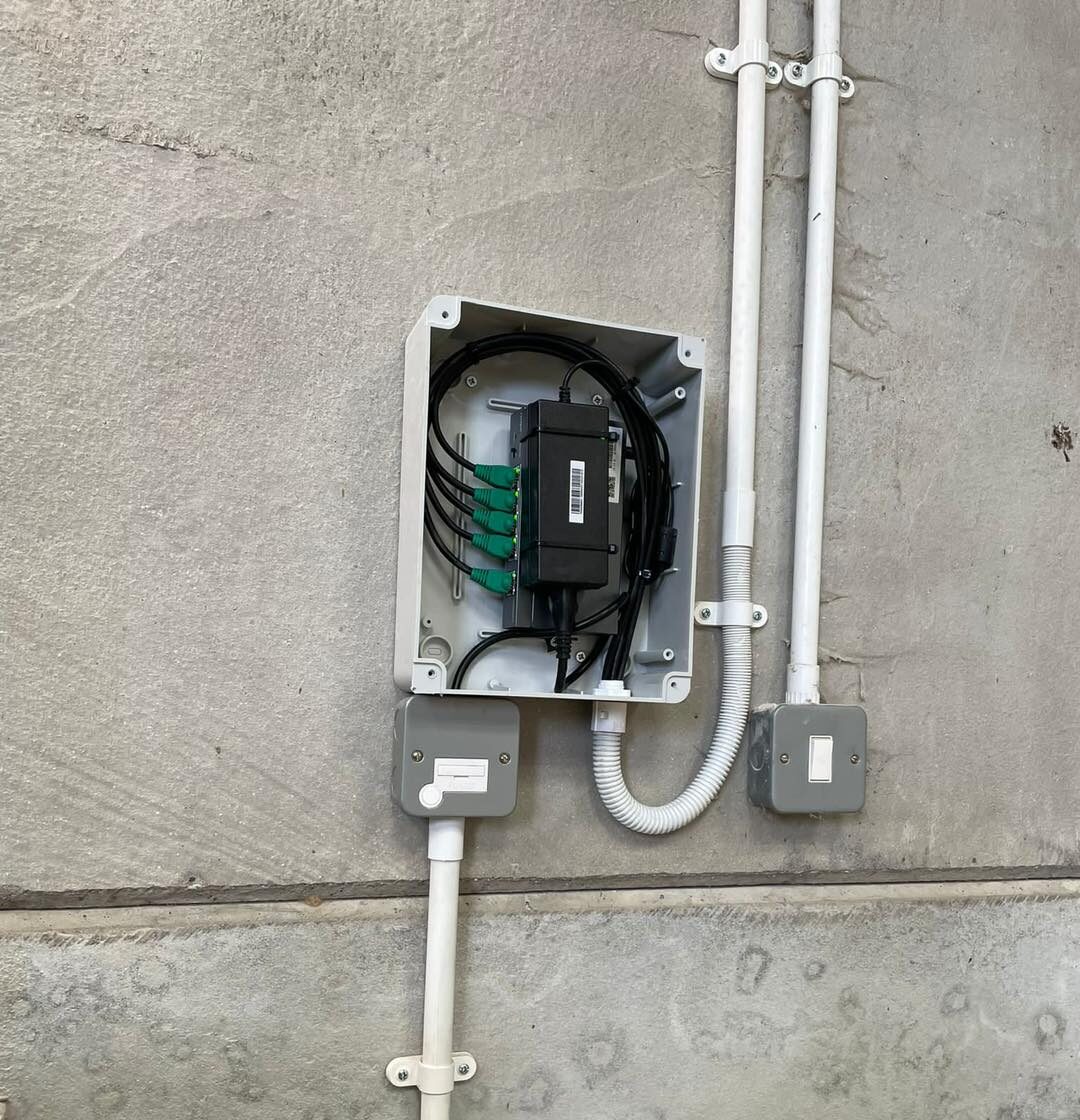
↗An installed camera overlooking the Welsh countryside.↗A finished enclosure with organised cable routes.
09 / Put the plan to work
Farm security checklist: a sensible order to improve protection
The best agricultural security plans are layered and practical. Start with access, then move to target assets, then build evidence and routine around that.
0 / 6 steps checked
List all gates, side accesses, tracks, lane entries and openings that a vehicle or person could use. Most farms know the main entrance but have not properly ranked the secondary routes by risk.
Decide what would hurt most if stolen or damaged: quads, trailers, GPS units, tools, fuel, livestock handling equipment, workshop kit or major machinery.
Cover and harden the approaches and exits before trying to watch every corner of the site. If the route is controlled, everything else becomes easier to protect.
Workshops often contain concentrated value. Internal storage, strong doors, better locks and proper coverage usually matter more than superficial upgrades.
Think about how someone would drive to the area, load what they want and leave. Design around that route rather than just the item sitting there.
Rural night conditions are different. If the footage is not useful in darkness, the farm is still carrying a serious weakness.
10 / Design the view that matters
CCTV strategy for agricultural security and farm crime prevention
CCTV works best on farms when it is part of a proper security layout, not when it is added casually after a theft. The aim is not only to record movement. It is to create usable evidence, stronger deterrence, better remote awareness and more control over how the site is monitored day and night.
Main entrance gates and principal vehicle access points
Secondary entrances that are quieter and more likely to be exploited
Yard choke points where vehicles must slow, turn or queue
Machinery sheds, workshops, tool stores and fuel locations
Livestock buildings, lambing areas, calving sheds and handling points where monitoring matters
Remote buildings linked by sensible network design where needed
↗Engineers working inside an agricultural building.
What good agricultural CCTV should achieve
Clear route coverage for arrivals, exits and suspicious drive-through activity
Usable daytime and night-time image quality, not just silhouettes
Stable remote viewing that actually works on real farms
Reliable recording and playback when footage is needed quickly
Coverage that reflects the site layout rather than generic camera placement
Expansion options for new buildings, changing workflows and future growth
Overview cameras
Overview views are helpful for context, but they should not be the whole strategy. Farms usually need at least some angles designed for real identification rather than just scene coverage.
Identification points
Gates, bends, slow points, shed doors, workshop fronts and places where vehicles must pause or narrow down are usually the best places to get useful footage.
Practical farm design
The right design is often better than simply adding more cameras. Better positioning, better route thinking and better network planning typically outperform clutter.
PTZ cameras, linked buildings and remote viewing on working farms
Farms often need more than one simple fixed camera by the back door. Agricultural sites may involve separate sheds, livestock buildings, yards divided by distance, and a need to view different areas without physically walking between them every time. That is where proper system design matters.
↗An engineer working inside an agricultural building.
↗Installed PTZ cameras mounted on a wooden beam.↗An engineer installing a PTZ camera in a livestock shed.
PTZ livestock cameras
PTZ cameras can be useful for lambing, calving, shed checks and broader yard visibility when chosen and positioned properly. They are not a magic replacement for every fixed camera, but they are very effective when used for the right purpose.
Multiple buildings
A lot of farms need coverage across more than one building. That may mean linking separate structures, protecting the route between them, and thinking carefully about which building acts as the main recording or viewing point.
Remote access that actually helps
Remote viewing should reduce unnecessary walking and guesswork. It should feel stable, practical and useful rather than awkward or unreliable.
If grant support or efficiency-led farm monitoring is relevant to your site, you can also view our Farm Efficiency Grant page for more information on the role PTZ monitoring can play on livestock and wider farm sites.
People who understand the site
Good security starts with a useful conversation.
A farm survey should follow how your site works: where vehicles arrive, where machinery stays overnight, how livestock are checked and which buildings need a reliable connection.
12 / The bigger rural picture
What counts as rural crime in Wales?
Rural crime is broader than machinery theft alone. In Wales, the wider policy and policing picture includes categories such as agricultural crime, wildlife crime, heritage crime, equine issues, environmental harm and other offences affecting the countryside. For farms, the most commercially relevant part is usually straightforward: theft, damage, trespass, intimidation, livestock-related offending, fuel theft, equipment theft and repeated site targeting.
01
Agricultural crime: machinery, fuel, tools, workshops, outbuildings and livestock-related offences
02
Equine and trailer risks in rural areas where access and storage are weak
03
Wildlife and land-related offences that affect the wider countryside environment
04
Environmental or site damage issues such as fly tipping, abuse of access and boundary harm
The key point for farm owners is simple: do not think of security only as stopping one theft. Think of it as reducing the broader set of opportunities that come with isolated buildings, open land, expensive equipment and irregular oversight across a working agricultural site.
13 / Local knowledge, across Wales
Farm CCTV and agricultural security across Wales
We support farms and rural businesses across Wales with farm CCTV, agricultural CCTV, rural security cameras and wider farm-security planning. The design is based on the property itself: access routes, buildings, livestock areas, machinery, fuel, workshops, vulnerable assets and the distances between them.
Carmarthenshire farm security
Farm security in Carmarthenshire often means protecting a mix of livestock buildings, yards, workshops, stores and long approach roads. We regularly plan systems around Carmarthen, Llanelli, Llandeilo, Newcastle Emlyn and surrounding rural areas.
Pembrokeshire agricultural CCTV
Pembrokeshire farms often combine coastal exposure, separate buildings and long-distance access routes. We cover farms around Haverfordwest, Pembroke, Milford Haven and more remote holdings across the county.
Ceredigion rural security
Ceredigion sites often need practical coverage for yards, sheds and gate routes rather than generic one-camera solutions. We cover farming communities around Aberystwyth, Cardigan, Lampeter and surrounding rural areas.
Powys and Brecon farm CCTV
Powys, Brecon, Sennybridge and surrounding areas often involve large sites, multiple sheds and greater distance between assets. The right answer is usually better planning, not just a bigger camera count.
Swansea, Neath and South Wales rural sites
Farms and mixed-use rural properties near Swansea, Neath Port Talbot and the wider South Wales belt often need stronger route-based protection because access is easier for outside vehicles and offenders may have more opportunities to blend in.
East Wales and Monmouthshire
Farms across East Wales and Monmouthshire often need systems that combine strong route coverage, usable evidence and reliable remote viewing. For more detail, see our East Wales page.
Across every region, the aim is the same: understand how the farm is actually used, identify the routes and assets that matter most, and design a security system that is practical, reliable and easy to use day to day.
14 / Notice it. Record it. Report it.
Reporting suspicious behaviour and treating patterns seriously
Security is not only about buying hardware. It is also about observation, record keeping and taking suspicious activity seriously. Many farms can point to incidents that looked small in isolation but were obvious warning signs in hindsight: a gate left the wrong way, missing fuel, cut ties, unknown vehicles slowing down, someone asking too many questions, unexplained drone activity, repeat drive-bys or outbuildings being checked.
Report attempted issues too
A failed attempt or suspicious visit is still useful intelligence. It can reveal pattern, route, timing and intent even when nothing substantial was taken.
Keep practical records
Asset lists, serial numbers, photos, dates and notes about suspicious activity all help when incidents need to be investigated or evidenced later.
Think in patterns, not moments
Farms are rarely targeted in a vacuum. Small details over time can matter more than one dramatic incident.
The wider Wales strategy context
Wales has an active wildlife and rural crime strategy for 2025 to 2028, continuing joint work between Welsh Government and police forces. That matters because it reflects the fact that rural crime is being treated as an ongoing structural problem rather than a seasonal inconvenience. Farms should take the same view internally by building practical security layers and reviewing them regularly.
If a crime is happening now or someone is in immediate danger, call 999. For non-emergency reporting and practical machinery protection advice, use the Dyfed-Powys Police guidance.
15 / Follow the right next step
Useful Dyfed CCTV farm and agricultural pages
This page is designed to act as the broader authority guide. These pages support it with more specific service and case-study relevance.
Frequently asked questions about farm security and agricultural CCTV
These are some of the practical questions farmers and rural businesses commonly ask when comparing CCTV and wider agricultural security options.
What is the best CCTV setup for a farm in Wales?
The best farm CCTV setup depends on the site layout, but in most cases it should cover the main entrance, key vehicle routes, yard choke points, workshops, machinery sheds, fuel stores and any livestock buildings that matter operationally. The best result usually comes from a mix of overview coverage and more focused identification angles rather than one wide camera trying to do everything.
Do farms need different CCTV from normal houses or businesses?
Yes. Farms have different risks: larger sites, multiple buildings, outlying sheds, difficult lighting, longer approach routes, more vehicle movement and more need for remote viewing. Agricultural CCTV should be designed around those realities, not copied from a domestic template.
Where should cameras go on a farm?
The strongest starting points are usually the main gate, secondary entrances, routes in and out, machinery sheds, workshops, fuel points, trailer areas and livestock buildings where monitoring is useful. Camera placement should follow the route a person or vehicle would use, not just the shape of the building.
Are farm PTZ cameras worth it?
They can be very worthwhile when used properly, especially for livestock monitoring, lambing and broader yard observation. They are most effective when paired with a sensible overall system design rather than treated as a total replacement for well-positioned fixed cameras.
Can farm CCTV help with lambing and calving checks?
Yes. A lot of farms use CCTV not only for theft prevention but also for welfare checks, lambing, calving and general oversight of livestock buildings. This is one of the reasons remote viewing quality matters so much in agricultural systems.
What are the biggest rural crime risks on farms?
Common issues include quad theft, tractor and machinery theft, trailer theft, fuel theft, workshop break-ins, GPS theft, livestock theft, repeated trespass and general reconnaissance activity where offenders assess the site before returning.
Does agricultural CCTV work in remote rural locations?
It can, provided the system is designed properly around the site, the buildings, the network approach and the real viewing requirements. The important thing is not just whether a camera can be mounted, but whether the whole system will record properly and be practical to use day after day.
What areas of Wales do you cover for farm CCTV?
This page is written for farms across Wales, including Carmarthenshire, Pembrokeshire, Ceredigion, Powys, Swansea, Neath Port Talbot, Cardiff, the Vale, Monmouthshire, Brecon and wider North Wales coverage where relevant.
Will a farm camera record if the internet connection drops?
A locally recording system can continue recording without internet access when the recorder, cameras, power and local network remain working. Remote access depends on the internet connection. Ask for the recording and remote-viewing arrangements to be explained during the survey.
Can one PTZ camera replace every fixed camera on a farm?
A PTZ camera can move and zoom, but it records the direction it is facing at that moment. Fixed views remain useful at gates, doors and other places where continuous route coverage matters. The best combination depends on the layout and daily work.
What should I prepare for a farm security survey?
Bring a simple sketch of the buildings and entrances, a list of the assets you most want to protect, and any examples of previous incidents. Tell us where power and internet are available, which areas need night coverage and who needs to view the cameras.
Can separate sheds share one CCTV system?
Often they can, but the connection needs to suit the site. Distances, obstacles, power, cable routes and the local network affect the design. A survey should establish how each building will connect and how footage will be recorded and viewed.
Your farm. Your next step.
Need help securing a farm, yard, shed network or rural site?
Call 01267 892492 and tell us the basics: how many buildings you have, where the main entrances are, what needs the most protection, whether the priority is theft prevention, livestock monitoring, evidence, or all three, and whether the site needs linked buildings or better remote viewing. We can help you plan a sensible agricultural security layout with CCTV focused on the places that actually matter.